
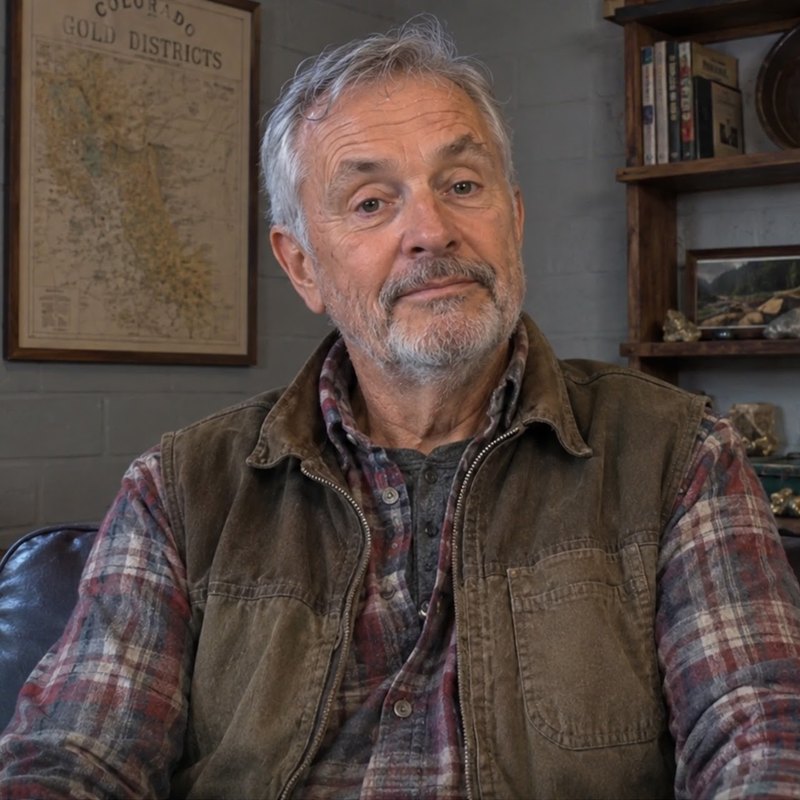
 “A creek is a document. Learn its grammar and you can open it anywhere.”
Book 1 of 3
Gold Every Time
101 Ways to Read Any Creek in Sixty Seconds
A field method for sizing up a creek fast: why gold moves and where it rests, bedrock traps, inside bends, riffles, plunge pools, confluences, eddies, gravel bars, black sands, and the pyrite and mica imposters. Then every kind of creek, and a chapter for every tool from the gold pan to the dry washer. It ends with a sixty-second master assessment you can use on any new creek.
- The Sixty-Second Promise
- Why Gold Moves and Where It Rests
- The Anatomy of a Creek in One Minute
- Reading Water Color and Clarity
- The Sound of Gold
- Smell and the Mineral Clue
- Touch: Feeling the Streambed
- Taste the Water (Carefully)
- The First Sixty Seconds: A Complete Walkthrough
- Creek Size and Gold Class
- Gradient: The Engine of Deposition
- Bedrock: The Ultimate Trap
Show all 101 chapters
- Reading Riffles and Runs
- Pools and Their Secrets
- The Inside Bend
- The Outside Bend and Cut Bank
- Obstacles: Boulders, Logs, and Roots
- The Kink in the Creek
- Confluences: Where Two Creeks Meet
- Waterfalls and Plunge Pools
- Cascades and Step-Pool Systems
- The Floodplain: Ancient Channels
- Terraces and Benches
- Reading the Banks: Soil and Stratigraphy
- Clay Layers and Hardpan
- The False Bedrock Trap
- Reading Rocks: Lithology Basics
- Quartz Veins and Stringers
- Iron Oxides and Gossans
- Black Sands: The Heavy Mineral Trail
- The Panning Test: A One-Minute Confirmation
- Reading Moss and Vegetation
- Tree Roots and Bank Stability
- The Role of Floods
- Reading Low Water and High Water
- Ice, Snow, and Winter Creeks
- Desert Creeks and Ephemeral Flow
- Urban Creeks: Reading the Forgotten
- Mining Disturbance: Old Channels and Tailings
- Reading a Creek from a Distance
- Maps and GPS in Sixty Seconds
- Aerial Imagery and LiDAR
- The Sixty-Second Sketch
- Prioritizing Multiple Traps
- The One-Minute Sample Plan
- Reading Creek History from a Single Rock
- The Importance of Bedrock Dip
- Fractures, Joints, and Fissures
- Potholes and Bedrock Hollows
- The Midpoint of the Book: A Unified Field Method
- Reading Current Seams and Flow Lines
- The Eddy: A Gold Trap
- Converging and Diverging Flow
- Standing Waves and Hydraulics
- Undercurrents and Subsurface Flow
- Reading a Creek at Night
- The Color of Gold in Water
- Pyrite, Mica, and Other Imposters
- Reading Gravel Bars: Size and Sorting
- The Armor Layer
- Reading a Creek After Rain
- Drought Conditions and Stagnant Pools
- Reading a Creek in a Canyon
- Reading a Creek in a Meadow
- Reading a Braided Creek
- Reading a Tidal Creek
- Reading a Spring-Fed Creek
- Reading a Glacier-Fed Creek
- Reading a Creek with Waterfalls
- Reading a Creek with Beavers
- Reading a Creek with Logjams
- Reading a Creek with Landslides
- Reading a Creek with Mine Tailings
- Reading a Creek with Old Dams
- Reading a Creek with Diversions
- The Sixty-Second Assessment of a New Creek
- Reading Water Temperature
- Reading Water Conductivity
- Reading pH in a Creek
- Reading a Creek with a Magnet
- Reading a Creek with a Blacklight
- Reading a Creek with a Metal Detector
- Reading a Creek with a Sluice
- Reading a Creek with a Dredge
- Reading a Creek with a Snuffer Bottle
- Reading a Creek with a Crevice Tool
- Reading a Creek with a Hand Auger
- Reading a Creek with a Bank Sampler
- Reading a Creek with a Gold Pan
- Reading a Creek with a Classifier
- Reading a Creek with a Bucket and Trowel
- Reading a Creek with a Yabby Pump
- Reading a Creek with a Suction Dredge
- Reading a Creek with a Highbanker
- Reading a Creek with a Trommel
- Reading a Creek with a Dry Washer
- Reading a Creek with a Rocker Box
- Reading a Creek with a Long Tom
- Reading a Creek with a Sluice Box
- The Sixty-Second Master Assessment
- Gold Every Time: Putting It All Together